

Blog
Custom Glass Display Cabinet ZGE-Q01

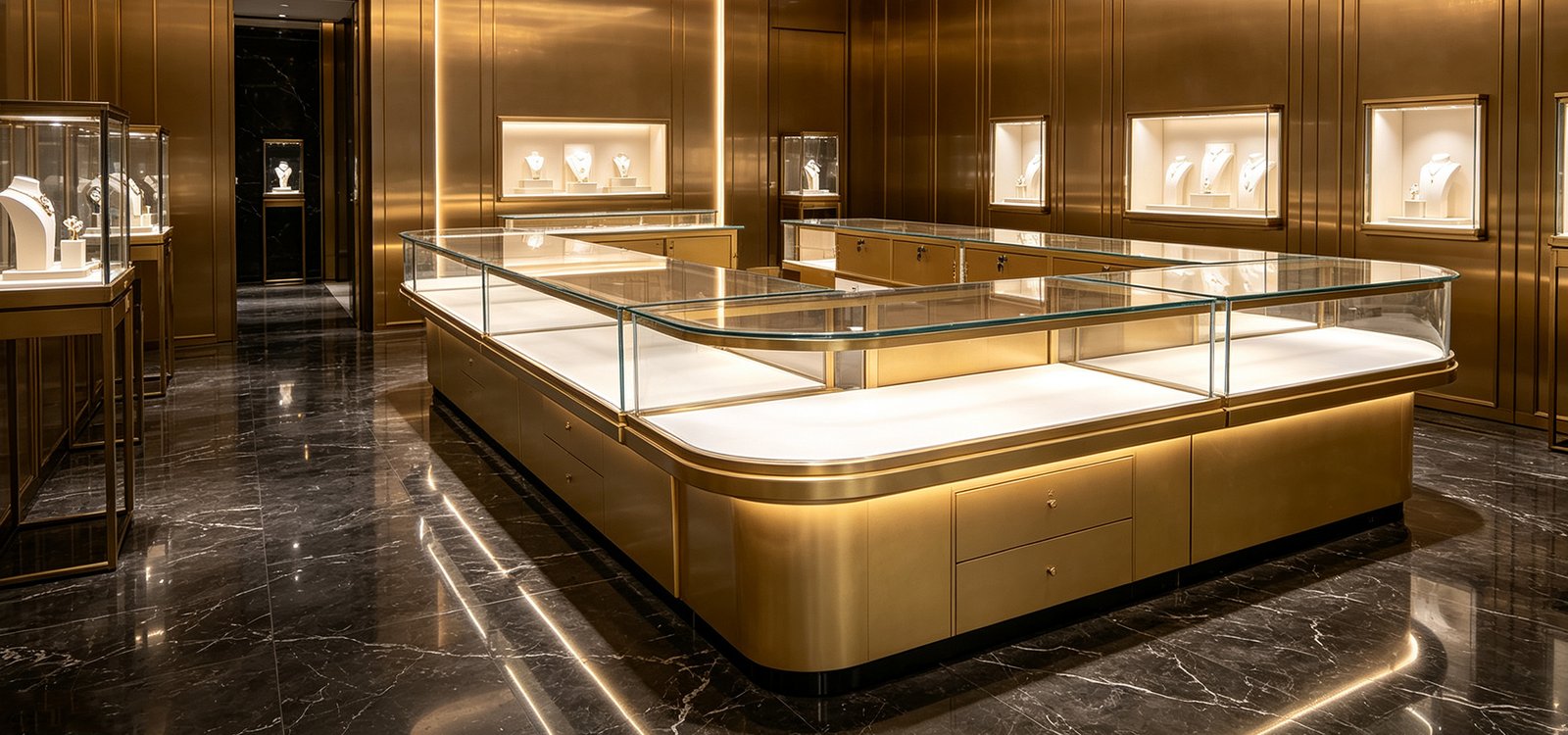
How to Choose and Arrange Glass Display Cases for Jewelry Stores? Master Core Tips to Boost Store Appeal and Sales
For jewelry stores, glass display cases are more than just a place to showcase jewelry—they’re a core tool for shaping a high-end store image, attracting customers to stop by, and enhancing the perceived value of products. A well-chosen display case, paired with a scientific arrangement plan, can maximize the luster and texture of jewelry, optimize the customer shopping experience, and indirectly drive sales growth. This article will provide a detailed guide for jewelry store owners from two core dimensions: selection key points and arrangement skills, helping you create a high-end, practical, and attractive display space.
I. Key Points for Choosing Glass Display Cases for Jewelry Stores: Balance Texture, Safety, and Practicality
When selecting display cases, you need to combine factors such as jewelry categories, store style, and space size, focusing on four core dimensions: material, safety performance, lighting configuration, and size specifications. Avoid affecting the display effect and store operation due to improper selection.
1. Material Selection: Prioritize High-Transparency Glass + Stable Cabinet to Highlight High-End Texture
Glass is a core component of display cases, and its quality directly affects the display effect of jewelry. We recommend prioritizing ultra-clear tempered glass. This type of glass has low iron content, no greenish tint common in ordinary glass, and a light transmittance of over 90%. It can clearly show the details, luster, and fire of jewelry, making diamonds, gold, colored gemstones, and other accessories more attractive. In terms of thickness, choose based on the weight of the jewelry: 8-10mm thickness is recommended for regular display; if displaying large and valuable jewelry (such as jadeite ornaments, platinum sets), 12mm thickened tempered glass is recommended to balance transparency and load-bearing capacity.
The cabinet frame material should match the luxurious style of the store. For light luxury and high-end stores, titanium gold stainless steel or brushed stainless steel is a great choice—its metallic texture is gentle and noble, rust-resistant, scratch-resistant, and wear-resistant, maintaining its beauty even with long-term use. For minimalist-style stores, matte black titanium gold or aluminum alloy frames can be paired, which are low-key and elegant, suitable for a variety of decoration styles. The cabinet panels are recommended to be E0-grade environmentally friendly panels, which are eco-friendly and odorless, and also have good moisture resistance to avoid affecting jewelry storage due to environmental humidity.
2. Safety Performance: Hold the Bottom Line to Protect Valuable Jewelry
Jewelry is valuable, so the safety performance of display cases cannot be ignored. It is necessary to check from three aspects: glass explosion-proof, cabinet anti-theft, and lock quality. Prioritize 3C-certified tempered glass for the glass, which has good explosion-proof performance. Even if it breaks accidentally, it will not produce sharp fragments, which not only protects customers’ safety but also reduces jewelry losses. For high-end luxury counters, laminated bulletproof glass can be used to further improve pry and impact resistance.
The cabinet frame should adopt an integrated molding process, with hidden welding points and a stable structure to avoid loosening or deformation. Alloy anti-theft locks are recommended, which have good sealing and anti-theft performance, and are paired with a hidden lock hole design to not damage the overall beauty of the display case. Some high-end display cases can be equipped with intelligent anti-theft alarm devices, which will sound an alarm in time when the cabinet is pried or opened abnormally, providing all-round protection for jewelry safety.
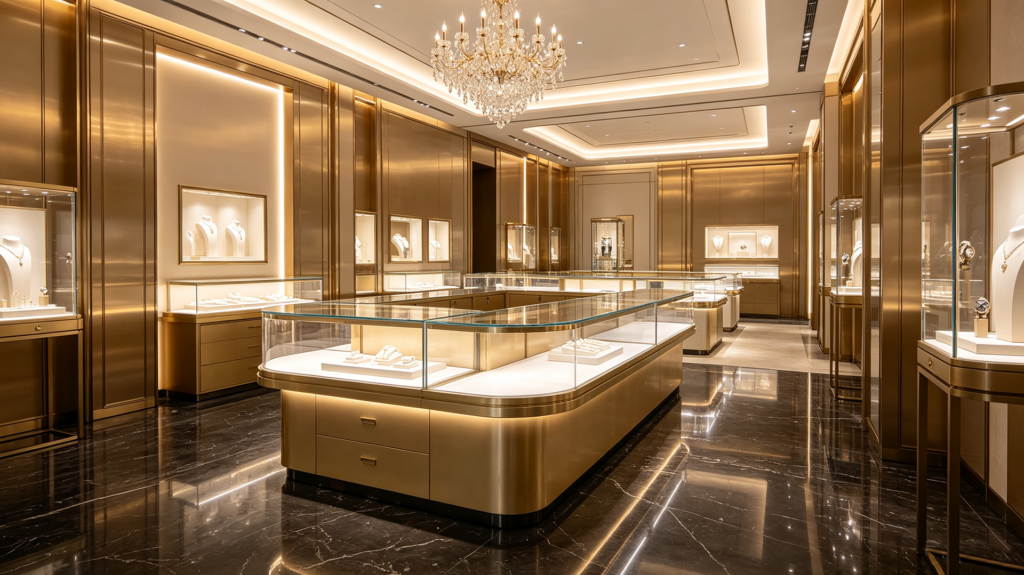
3. Lighting Configuration: Lighting is the "Soul" to Accurately Highlight Jewelry Texture
Lighting is the key to enhancing the display effect of jewelry. Proper lighting can highlight the luster, fire, and layering of jewelry, making ordinary accessories also show a high-end texture. For the lighting of display cases, we recommend high-color-rendering LED light strips with a color rendering index (Ra) ≥ 90, which can truly restore the color of jewelry and avoid color difference. In terms of color temperature, for warm-toned jewelry such as gold and K gold, warm white light around 3000K is recommended to create a warm and luxurious atmosphere; for cool-toned jewelry such as diamonds, platinum, and colored gemstones, neutral white light of 4000-5000K can be used to highlight the transparency and fire of the accessories.
The lighting layout should adopt a hidden design, with the light strips embedded in the cabinet light trough to avoid glare caused by direct light on customers’ eyes, while achieving uniform light distribution without dark corners or shadows. Auxiliary light sources such as spotlights and fiber optic lights can be paired to highlight core best-selling jewelry, form a visual focus, and attract customers’ attention. In addition, the lighting should have adjustable functions, which can flexibly adjust the brightness and angle according to the store’s light environment and jewelry categories to adapt to different scene needs.
4. Size Specifications: Adapt to Space and Categories to Improve Space Utilization
The size of the display case needs to be customized according to the store’s space size, jewelry categories, and display needs to avoid space waste or crowded display. First, measure the available space of the store, clarify the placement position and acceptable size of the display case. The height of the display case in regular stores is recommended to be controlled at 90-120cm, and the width can be adjusted flexibly according to the space. The width of a single display case is preferably 80-150cm to ensure that customers do not need to bend over or raise their hands excessively when browsing.
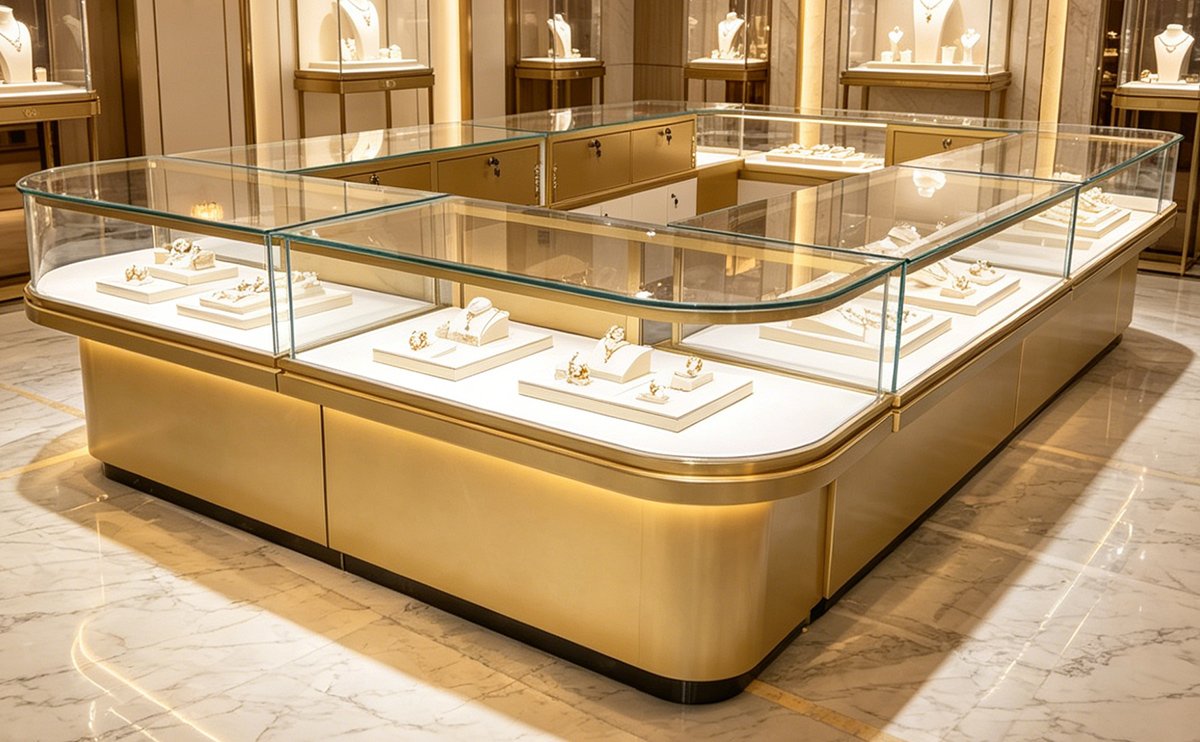
Second, choose the display case structure according to the jewelry category. For long accessories such as necklaces and bracelets, display cases with multi-layer hanging rods are recommended for easy hanging display to show the line beauty of the accessories. For small accessories such as rings, earrings, and pendants, display cases with multi-layer drawers and layered partitions can be used for classified display, which is convenient for customers to choose. For large jewelry ornaments, open high cabinets can be used with glass guardrails to ensure both display effect and safety. In addition, modular combined display cases can be selected, which can be flexibly spliced and adjusted according to store activities and display needs to improve space utilization.
II. Arrangement Skills for Glass Display Cases in Jewelry Stores: Scientific Layout to Optimize Shopping Experience
After choosing the right display cases, a scientific arrangement plan can maximize their role, enhance the overall beauty of the store and the customer shopping experience. When arranging, follow the principles of “visual focus, smooth traffic flow, clear classification, and coordinated atmosphere”, and reasonably plan the display position and display method in combination with the store style and customer browsing habits.
1. Layout Planning: Follow Traffic Flow Design to Create Visual Focus
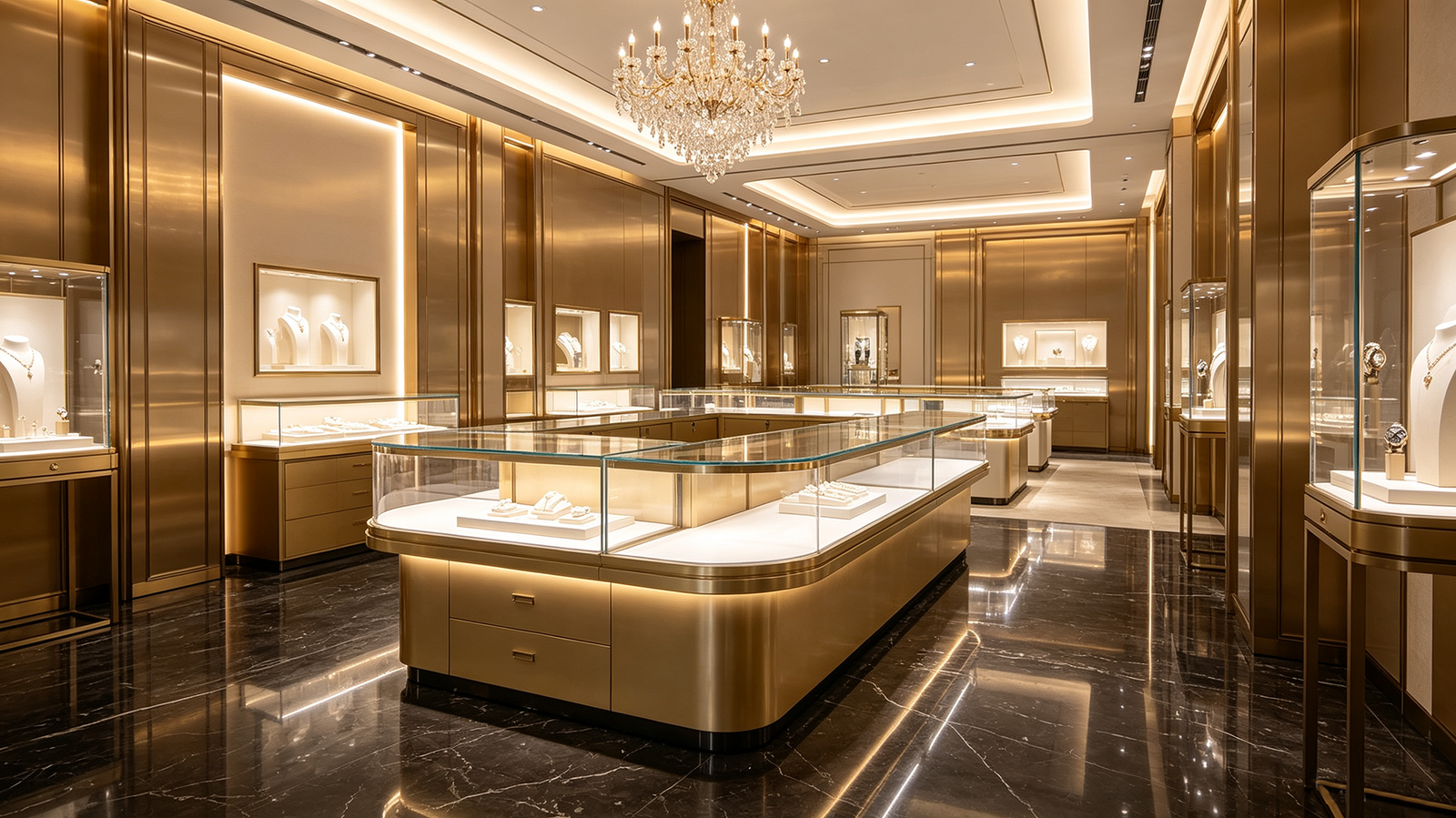
The store layout should combine customer browsing habits to create a smooth shopping traffic flow and avoid visual dead ends and congestion. Regular jewelry stores can adopt a traffic flow design of “entrance drainage—core display—auxiliary display—cashier settlement”. Place simple and bright display cases at the entrance to showcase best-selling jewelry or seasonal new products to attract customers into the store. Island cabinets can be placed in the center of the store to display popular categories (such as diamond rings, gold necklaces) and guide customers to browse in depth. Wall-mounted display cases can be installed on the walls to display high-end categories or brand series jewelry, enhancing the spatial layering of the store.
Pay attention to controlling the spacing between display cases. The spacing between adjacent display cases is recommended to be no less than 1.2 meters to ensure that customers can browse and try on jewelry calmly and avoid a sense of depression due to narrow space. At the same time, set up a core display area in a prominent position of the store, place high-end jewelry or limited-edition accessories, and match with key lighting to create a visual focus and enhance the high-end texture of the store.
2. Display Skills: Clear Classification to Highlight Core Products
Jewelry display should be clearly classified and prioritize key products, allowing customers to quickly find their favorite accessories while highlighting the advantages of core products. First, display jewelry by category, placing different categories such as gold, platinum, diamonds, colored gemstones, and silver jewelry separately, with each category corresponding to a dedicated display case. Avoid mixed display to improve selection efficiency. Within the same category, it can be further subdivided by style (such as rings, necklaces, bracelets) or price range to meet the needs of different customers.
Second, adopt a “primary and secondary combination” display method. Reserve a core position in each display case to place best-selling, high-end, or seasonal new products, and match with key lighting and exquisite display props (such as velvet bases, jewelry trays) to highlight product advantages. Place regular styles in the surrounding positions to form a contrast and guide customers to pay attention to core products. In addition, the display density should be moderate, avoiding the loss of layering of jewelry due to overcrowding, and also avoiding space waste due to over-sparseness. It is recommended to control the display volume of each display case at 70%-80%, leaving a certain blank space to improve the display effect.
3. Atmosphere Creation: Coordinate Style to Strengthen High-End Texture
The arrangement of display cases should be coordinated with the overall decoration style of the store to avoid abrupt style and strengthen the high-end and luxurious image of the store. For light luxury and high-end stores, display cases in gold or off-white tones can be used, paired with display props such as velvet and crystal to create a warm and luxurious atmosphere. For minimalist and fashionable stores, display cases in black or white tones can be used, paired with metal and glass props to create a minimalist and elegant visual effect.
In addition, the atmosphere can be enhanced through detailed decoration, such as placing small floral arrangements and crystal ornaments in the display cases to increase spatial layering; laying soft carpets around the display cases to improve the comfort of customers’ shopping; coordinating the overall store lighting with the display case lighting to avoid excessive contrast between light and dark and create a soft and comfortable browsing environment. At the same time, keep the display cases clean and tidy, clean fingerprints and dust on the glass surface in time, and organize the display props regularly to ensure that the jewelry is always in the best display state.
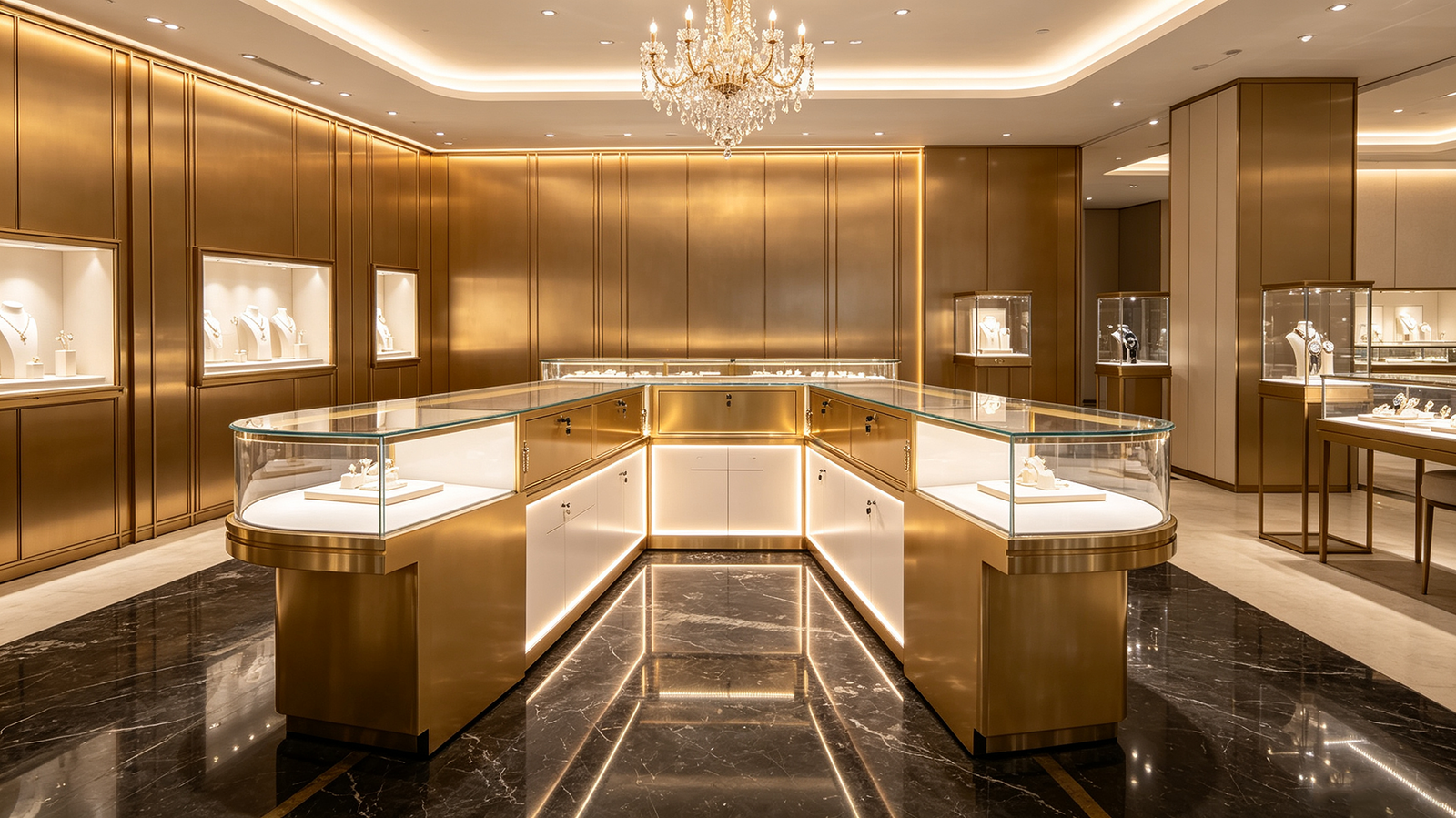
4. Detail Optimization: Balance Practicality to Improve Shopping Experience
When arranging display cases, it is necessary to balance practicality and optimize detailed design from the perspective of customers and store staff. For customers, the glass of the display case should be anti-glare treated to avoid affecting the browsing effect due to direct light; the height of the display case should be moderate to facilitate customers of different heights to browse and try on; a try-on counter can be set next to the display case, with try-on tools (such as jewelry magnifiers, gloves) placed to improve the try-on experience.
For store staff, the display case should have good storage function, with a locked storage cabinet on the lower layer for storing inventory jewelry, gift boxes, try-on tools, etc., for easy access. The cabinet doors and drawers of the display case should adopt silent slide rails, which open and close smoothly to reduce noise. Some display cases can be equipped with adjustable shelves to flexibly adjust the height according to display needs and adapt to jewelry of different sizes. In addition, the display case should reserve enough operating space to facilitate staff to place and organize jewelry and receive customers.
III. Summary: Choose and Arrange Well to Make Display Cases a "Money-Making Tool" for the Store
The selection and arrangement of glass display cases for jewelry stores are key links to enhance the store image, optimize the shopping experience, and drive sales. When selecting, focus on material, safety performance, lighting configuration, and size specifications, and choose a suitable display case in combination with the store style and jewelry categories. When arranging, follow the principles of traffic flow design, classified display, and coordinated atmosphere, optimize details, and create a high-end, practical, and attractive display space.
It should be noted that the selection and arrangement of display cases are not set in stone. Store owners can flexibly adjust the display method and display content according to store activities, seasonal changes, and customer needs to keep the display cases fresh and continue to attract customers’ attention. We believe that as long as you master the above core skills, you can make glass display cases a “money-making tool” for your jewelry store, helping the store achieve double improvement in sales and reputation.